
Artificial intelligence, precision agriculture, and smart irrigation technologies are reshaping modern farming as producers face growing pressure from climate change, water scarcity, and rising production costs.
- Artificial Intelligence Opens New Opportunities for Global Agriculture
- Precision Agriculture Helps Farmers Optimize Resources
- Smart Irrigation Becomes Critical as Water Scarcity Increases
- AI-Powered Crop Monitoring Supports Early Disease Detection
- Smallholder Farmers Face Challenges in Adopting New Technologies
- The Future of Agriculture: Technology and Sustainability Must Work Together
Artificial Intelligence Opens New Opportunities for Global Agriculture
The global agricultural industry is entering a new era of digital transformation. Artificial intelligence (AI), automated machinery, satellite monitoring, and data-driven farming systems are creating opportunities to improve agricultural productivity while supporting environmental sustainability.
As farmers face unpredictable weather patterns, increasing operational expenses, and pressure on natural resources, agricultural technology is becoming an increasingly important part of food security strategies.
A World Bank report on artificial intelligence in agriculture highlights applications ranging from crop disease detection and precision farming to improved market forecasting and agricultural risk management.
Precision Agriculture Helps Farmers Optimize Resources
Precision agriculture is one of the most promising developments in modern farming.
By combining GPS technology, drones, satellite imagery, and advanced sensors, farmers can monitor field conditions and make more informed decisions about irrigation, fertilization, and crop protection.
These technologies can help agricultural producers:
- Improve water and fertilizer efficiency.
- Detect crop diseases and pest infestations earlier.
- Monitor soil moisture and crop development.
- Reduce unnecessary agricultural inputs.
- Support more accurate yield forecasting.
Rather than applying the same treatment across an entire field, precision farming enables producers to respond to differences in crop and soil conditions.
Smart Irrigation Becomes Critical as Water Scarcity Increases
Water management remains one of the biggest challenges facing global agriculture.
According to the Food and Agriculture Organization of the United Nations (FAO), agriculture accounts for more than 70% of global freshwater withdrawals.
Smart irrigation systems offer a potential response to this challenge.
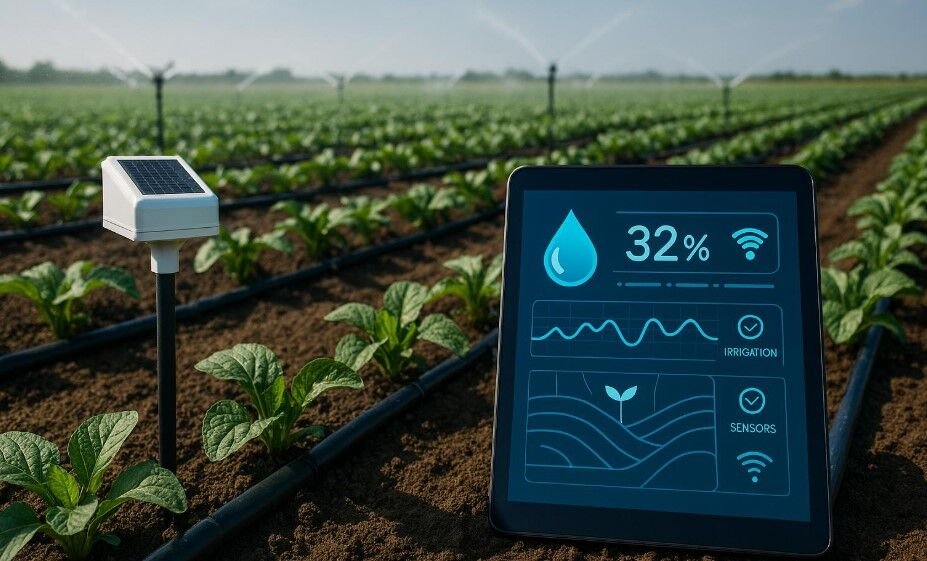
Using soil moisture sensors, weather forecasts, and AI-powered analytics, these systems can help farmers determine when and how much water their crops require.
Improved irrigation management could become particularly important in regions facing prolonged droughts and increasingly unpredictable rainfall.
AI-Powered Crop Monitoring Supports Early Disease Detection
Artificial intelligence is also changing how farmers identify crop health problems.
AI-powered image analysis can help recognize signs of plant diseases, nutrient deficiencies, and pest damage.
Combined with drone imagery and field monitoring, these systems may enable farmers to identify potential problems before they spread across larger agricultural areas.
However, accurate diagnosis still depends on reliable data, local growing conditions, and agricultural expertise.
Smallholder Farmers Face Challenges in Adopting New Technologies
Despite the opportunities, the transition toward smart agriculture is not without obstacles.
High equipment costs, limited internet connectivity, insufficient technical training, and unequal access to digital infrastructure can prevent smaller agricultural businesses from adopting advanced technologies.
The World Bank emphasizes that successful AI adoption requires investment in infrastructure, agricultural knowledge, reliable data, and inclusive policies.
Making affordable technologies accessible to smallholder farmers will be essential for ensuring that digital transformation benefits the wider agricultural sector.
The Future of Agriculture: Technology and Sustainability Must Work Together
Looking ahead, artificial intelligence and precision agriculture are expected to play an increasingly important role in the development of resilient food systems.
However, technology alone cannot solve every challenge facing global food production.
Sustainable soil management, responsible water use, agricultural research, and supportive government policies will remain essential.
As the agricultural sector continues to evolve, the most successful farming strategies may be those that combine digital innovation with practical agricultural experience.