
The global tractor industry is undergoing a major technological transformation as artificial intelligence, autonomous driving, GPS guidance, and connected machinery redefine agricultural operations. In 2026, tractors are evolving beyond conventional farm equipment into intelligent, data-driven machines capable of improving efficiency, precision, and farm management.
- Digitalization Is Changing the Future of Tractors
- GPS Guidance and Automated Steering Improve Field Precision
- Artificial Intelligence Brings New Capabilities to Agricultural Machinery
- Autonomous Tractors Move Closer to Commercial Farming
- Connected Tractors Enable Real-Time Fleet Management
- ISOBUS Technology Connects Tractors and Implements
- Digital Tractor Technology Supports Sustainable Agriculture
- Challenges Remain for Farmers and Machinery Manufacturers
Digitalization Is Changing the Future of Tractors
The agricultural machinery industry is experiencing a significant shift toward digital technologies. Modern tractors are increasingly equipped with intelligent control systems, satellite navigation, advanced sensors, and cloud-based connectivity.
These developments are changing how farmers manage field operations, monitor equipment performance, and make agricultural decisions.
Instead of relying exclusively on mechanical power and operator experience, modern tractors can now combine real-time field information with automated control systems.
A 2026 survey by agricultural equipment manufacturer CNH highlights the growing importance of these technologies. Among 217 surveyed farmers and ranchers in the United States and Canada, 89% reported using auto-guidance technology, while 54% planned additional precision technology investments within the following two years.
The findings suggest that digital solutions are becoming an important consideration for agricultural equipment investment.
GPS Guidance and Automated Steering Improve Field Precision
One of the most widely adopted innovations in tractor technology is GPS-based automatic steering.
Advanced satellite guidance systems allow tractors to follow predefined field routes with high accuracy, reducing unnecessary overlaps and helping operators maintain consistent working patterns.
When supported by Real-Time Kinematic (RTK) positioning technology, compatible systems can achieve centimeter-level positioning accuracy under suitable conditions.
Digital guidance offers several potential advantages:
- Reduced overlapping during planting, spraying, and fertilization.
- More efficient use of fuel, seeds, and agricultural inputs.
- Improved accuracy during repetitive field operations.
- Reduced operator workload during long working hours.
- More consistent field coverage and operational records.
As digital guidance systems become available across more tractor categories, precision agriculture is expanding beyond high-horsepower machinery.
Artificial Intelligence Brings New Capabilities to Agricultural Machinery
Artificial intelligence is becoming an increasingly important component of tractor digitalization.
In September 2026, John Deere introduced JD, an AI assistant integrated into its Operations Center platform. The technology is designed to help farmers interpret machinery, field, and operational data through natural-language questions.
The company initially introduced a limited early-access program for selected U.S. agricultural customers, with broader availability planned.
AI applications in agricultural machinery extend beyond data analysis.
Camera-based crop recognition, intelligent spraying systems, and automated implement adjustments are helping manufacturers develop tractors capable of responding to changing field conditions.
In October 2026, Valtra also introduced factory-fitted AI crop sensing through its Valtra Unlimited program in selected markets. Developed with PerPlant, the system uses cameras and artificial intelligence to support targeted spraying, variable-rate applications, and field mapping.
These developments demonstrate how tractors are becoming active participants in precision crop management.
Autonomous Tractors Move Closer to Commercial Farming
Autonomous driving is another major development reshaping the agricultural machinery sector.
Manufacturers are developing systems that enable tractors to perform selected field operations with reduced direct operator involvement.
Autonomous tractors can combine satellite positioning, cameras, sensors, obstacle detection, and remote monitoring software.
In September 2026, Fendt highlighted its progress in tractor automation, including the PTx OutRun system for autonomous grain-cart operations and soil cultivation.
The system allows compatible tractors to perform designated tasks under defined conditions while operators monitor operations and intervene when necessary.
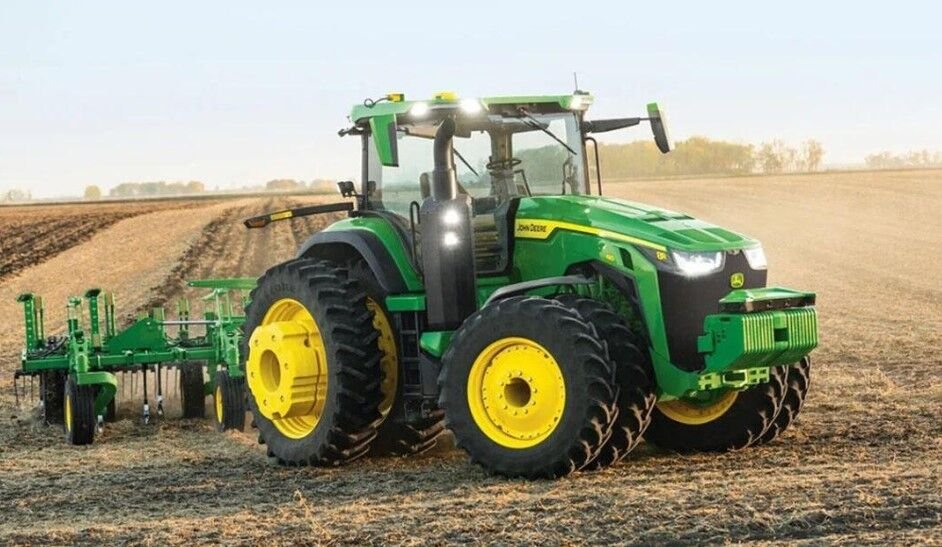
John Deere is also advancing autonomous tractor technology, including solutions designed for remote supervision through mobile devices.
Although widespread deployment still faces regulatory, technical, and economic challenges, autonomous machinery represents an important direction for agricultural equipment development.
Connected Tractors Enable Real-Time Fleet Management
Digital connectivity is transforming tractor ownership and maintenance.
Through telematics systems, farmers and fleet managers can remotely monitor machinery information, including operating hours, location, fuel-related data, and maintenance requirements, depending on equipment capabilities.
Connected tractor platforms can help agricultural businesses:
- Monitor machine utilization and field activity.
- Plan preventive maintenance.
- Reduce avoidable equipment downtime.
- Manage multiple tractors from centralized platforms.
- Analyze operational performance and historical data.
John Deere Operations Center and CNH FieldOps are examples of digital platforms connecting agricultural machinery with farm management systems.
In Türkiye, New Holland’s TTConnect system also provides functions such as vehicle tracking, fleet organization, maintenance monitoring, and historical reporting.
These technologies are particularly relevant to large farms, agricultural contractors, and businesses managing multiple machines.
ISOBUS Technology Connects Tractors and Implements
Another important element of tractor digitalization is ISOBUS, a standardized communication system based on ISO 11783.
ISOBUS enables compatible tractors and agricultural implements to exchange operational information through standardized electronic interfaces.
This technology can simplify the management of seed drills, fertilizer spreaders, sprayers, and other agricultural equipment.
In May 2026, KIOTI announced new precision farming solutions for its HX and RX tractor series, incorporating ISOBUS connectivity, telematics, navigation, and optional RTK automatic steering.
The development illustrates how advanced digital features are expanding into smaller and medium-sized tractor segments.
Digital Tractor Technology Supports Sustainable Agriculture
The digital transformation of tractors is also closely connected to environmental sustainability.
Precision guidance, variable-rate application, and intelligent machinery management can help farmers use agricultural resources more efficiently.
For example, GPS guidance may reduce repeated field passes, while targeted spraying systems can limit chemical applications to areas where treatment is needed.
However, environmental benefits depend on the technology, farming practices, field conditions, and correct system calibration.
Digitalization should therefore be viewed as a tool for supporting sustainable agriculture rather than a guaranteed solution on its own.
Challenges Remain for Farmers and Machinery Manufacturers
Despite rapid technological progress, several barriers continue to affect digital tractor adoption.
The cost of advanced equipment, software subscriptions, connectivity limitations, operator training, and compatibility between different machinery brands can influence investment decisions.
Data ownership and cybersecurity are also becoming increasingly important as tractors generate and transmit larger volumes of agricultural information.
Manufacturers will need to offer reliable, user-friendly, and economically accessible solutions to encourage wider adoption.