

Western Farmers and Ranchers Cope with Drought and Look for a Way Forward
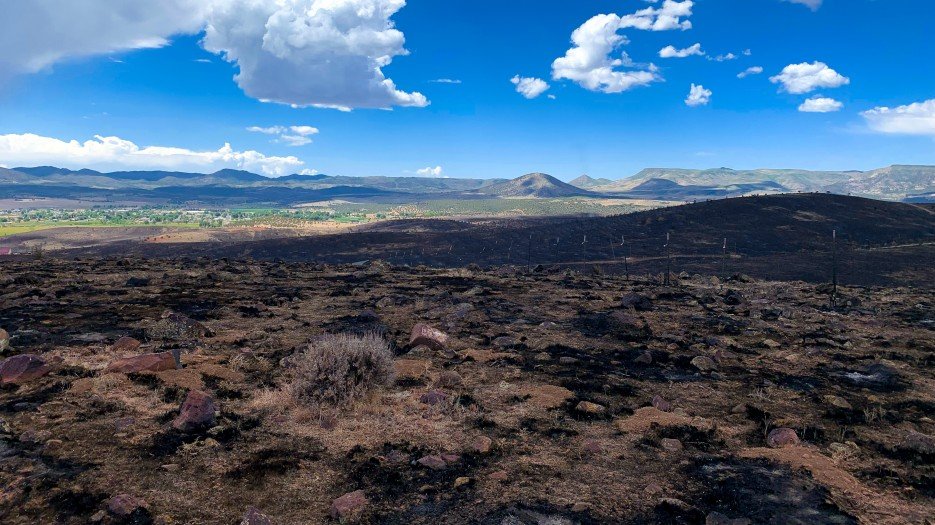
Farmers and ranchers often deal with the uncontrollable factor of the weather, and this year Mother Nature has been on a relentless scorched earth campaign in the West. Hoping this was the year to recover from the impacts of the COVID-19 pandemic and recent trade wars, farmers and ranchers instead faced a historic drought that has engulfed the entire region.
Despite occasional summer rains, 88% of our state remains in extreme drought and 100% is in severe drought, according to the U.S. Drought Monitor. Ranchers in the Central and Southern parts of Utah, who graze their animals on public lands, have faced delays in bringing animals onto allotments or were told they will have to reduce numbers or remove them early. This has put an extra squeeze on ranching families because the cost of purchasing feed for their animals has also almost doubled in some areas. Many have been forced to sell off animals at a fraction of their value, losing their best genetics in the process. These impacts will be felt for years to come.
Farmers faced difficult circumstances as well, with many who had water for irrigating crops shut off. They have had to make difficult choices about which crops to water and which to let die. This has been the case throughout much of Utah and other Western states, and will affect the availability and retail cost of food. But our state’s farmers and ranchers, like most around the country, have an amazing ability to get through it and continue.
As I visit with Utah farmers, many of whom have been here for generations, I have thought about how they were able to settle this land and have it “blossom as a rose.” It was by storing water. If you look back in history, you’ll find that as populations have grown, so has the need to store more water – especially here in the West. The 1940s ushered in the great era of dam building, where 48 of the largest capacity dams were built – largely thanks to New Deal funding. But by the 1960s and 1970s, environmental litigation and legislation largely ended that era of water storage.
A little math will tell you many of our largest reservoirs are now 50 to 100 years old. The time has come for renewed support and funding of water storage and infrastructure. The benefits for agriculture would be tremendous, but many others also benefit from these projects. Research into structures built by the Army Corps of Engineers found a six-fold return in terms of flood destruction prevention, not to mention benefits for recreational opportunities for the public, reducing the spread of invasive species, providing water for wildlife, and finally, providing a major source of renewable energy.
But storage alone isn’t the answer. Farmers and ranchers in our state and throughout the West need to continue to be part of the solution by being wise stewards of our water. I’ve seen great things done in our industry, from dairy farmers reusing the same water three different times to get milk to market, to fruit farmers using micro-emitters and instruments to measure soil moisture and apply just the right amount needed to produce the great fruit we enjoy.
These are just a few examples of how farmers have decreased water consumption using innovative and diverse conservation practices, but there are more. Make no mistake – farmers and ranchers are committed to being part of the solution. But we can’t do it alone. We need to partner with private and public sources to fund water infrastructure – and the time to do it is now.
This has been a difficult time for farmers and ranchers in the West, but there is no more resilient group of people that I would bet on. Together, we will pull through this hard time.
By Ron Gibson