

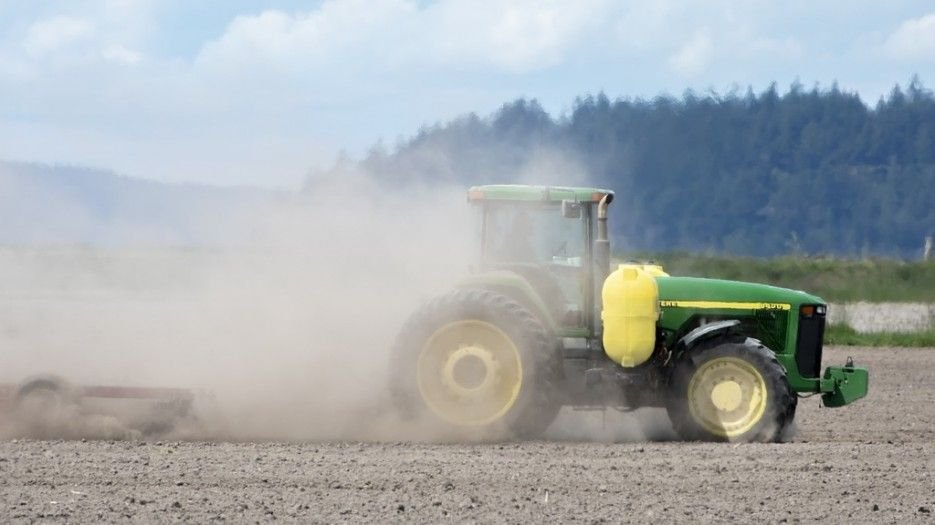
Western Drought Makes a Tough Job Much Tougher for Farmers and Ranchers
Nearly 80% of the West, including North and South Dakota, is in severe drought. That percentage is even more staggering when compared to the 20% of the region that fell into the severe drought range this time last year.
Many of the areas experiencing drought are key areas for grazing livestock, but the parched land is offering less and less in the way of grazing sustenance and as demand for feed rises, so do the costs. And just like crops, animals need to be watered, too.
A recent Farm Bureau survey of farmers and ranchers in drought-stricken states shows that more than 85% of respondents rated selling off portions of their herd or flock as prevalent or higher in their area. Similarly, 77% rated reducing acreage as prevalent or higher in their area.
Earlier this year, Texas farmer and rancher Ross Copeland shared his experiences dealing with drought with Republican members of the House Committee on Natural Resources.
“There have been many factors over the years making it increasingly difficult to continue farming and ranching,” Copeland told the lawmakers. “However, severe drought is one of the largest issues we face.”
Copeland is a fifth-generation farmer and rancher. He and his family raise cattle and sheep and grow crops in Coke, Sterling, Scurry and San Saba counties.
He’s no stranger to cracked ground desperate for the next rain.
As part of their farm rotation, Copeland often plants winter wheat in September or October and turns cattle out on the fields to graze in late winter or early spring. But severe drought conditions forced Copeland to reevaluate that plan for the last two years.
“The worsening drought made it impossible for us to grow a wheat crop, causing major disruption to our operation. Due to this, we have been forced to buy feed for cattle and even sell some of our herd to make ends meet,” he said.
In California, where 50 of the state’s 58 counties are under a drought state of emergency, Gov. Gavin Newsom has issued an executive order asking all Californians to voluntarily reduce water use by 15%. But it’s not as simple as turning the sprinkler off for farmers and ranchers.
“There are no silver-bullet opportunities to just ‘use less water’ without sacrificing productivity and the livelihoods of people in farm communities,” said Jamie Johansson, president of the California Farm Bureau. “While demand for water can be reduced, one thing will not change and that is the public’s demand for food.”
In addition, a map from the California Farm Water Coalition showing water cutbacks indicates agricultural regions throughout the state have already far exceeded the 15% in the form of reduced allocations, water rights curtailments and proposed or existing emergency regulations.
Johansson noted that expected water supplies for one-quarter of the state’s irrigated farmland has already been reduced by 95%, and more than half of that farmland is getting no surface water at all.
Norm Groot, executive director of the Monterey County Farm Bureau, said the primary concern at this point is 2022.
“If we don’t have precipitation this winter, our reservoirs will not have sufficient water supplies to continue releases for consistent recharge in 2022,” Groot said. “We are conscripted to release water throughout the year due to [National Oceanic and Atmospheric Administration] Fisheries requirements for habitat and fish passage, which helps with groundwater recharge but doesn’t allow us to manage our water storage for long-term efficiency.”