

Bu siteyi kullanarak Gizlilik Politikası ve Kullanım Şartları'nı kabul etmiş olursunuz.
Kabul et
Agro World Tarım Dünyası DergisiAgro World Tarım Dünyası DergisiAgro World Tarım Dünyası Dergisi
  • Agrotech
  • Haberler
  • Fuarlarlar
  • Traktör
  • Sektörel Bakış
  • Sürdürülebilirlik
  • E-DergiYeni
  • News
Bildirimler
Yazı Tipi BoyutlandırıcıAa
Agro World Tarım Dünyası DergisiAgro World Tarım Dünyası Dergisi
  • Haber
  • Agrotech
  • Sürdürülebilirlik
  • Sektörel Bakış
  • E-Dergi
  • Agrotech
  • Haberler
  • Fuarlarlar
  • Traktör
  • Sektörel Bakış
  • Sürdürülebilirlik
  • E-DergiYeni
  • News
Bizi takip edin
Saints are very much in the mind in terms of Ireland’s patron saint, but it is worth remembering another fellow who set out from Britain to Sweden in a similar bid to spread the the word of christianity. His name was Eskil and he set out east 700 years after St. Patrick crossed the water to Ireland. Although known to be born in Britain, his early childhood is something of a mystery. An unhappy ending However, by various ways and means he arrived as a missionary in central Sweden and settled at a village then called Tuna, sometime around 1080, where he set about converting the pagans to christianity. Despite some success in this endeavour, not all the locals were impressed, especially when he interrupted a ritual sacrifice, causing the said pagans to rapidly despatch him with axe and stones. Bridge at Eskilstuna Munktell Sweden The river at Eskilstuna today. The bridge was built in the Munktell works Whether this gruesome ending was a political move initiated by the then King of Sweden is a matter of some uncertainty. What is known is that he was buried near the location of his death some 15 miles from the city that now bears his name, a funeral prompted by the gushing of a fresh spring where his body was laid for a rest during the journey back to Tuna. That small village later adopted his name as a prefix and grew to become the city of Eskilstuna, and it is here that there lies another spiritual home, that of Volvo Construction. Creeping industrialisation in Sweden The area around Eskilstuna was blessed with modest iron core deposits and, along with coke produced from the surrounding forests, ironworks were established using the natural fall of the river to power metal working hammers. From these humble origins a town grew that specialised in forging steel goods, eventually, these included weapons, especially rifles, which were produced there from 1812 onwards in a royal armoury built for the task. Rifle factory Eskilstuna The old rifle factory is now a museum celebrating Eskilstuna’s industrial past The geographical location, far away from the coast and invading armies, was another attractive feature as it would take a long time for invading armies to capture it, during which period it could continue supplying the home side. A second saviour Reliance on water power had the drawback of necessitating many small workshops rather than a central workshop, as factories could only be located where there was a fall in the river and wheel could be installed. Munktell tractor volvo Munktell’s first tractor was the 30-40, of which this fully restored example at the Munktell Museum is the only known survivor Yet, by all accounts, manufacture thrived in the area and it was to this hub of activity that a young and hugely talented engineer by the name of Theofron Munktell was drawn. Munktell had been responsible for upgrading the royal mint in Stockholm and much of the equipment on which it ran during the early part of the 19th century was designed and built under his supervision. Theofron Munktell Eskilstuna, Sweden A statue of Theofron Munktell sits outside the Munktells Museum His first assignment was with the Royal armoury and from there he started his own engineering business, which at first, comprised the manufacture of book printing presses. His company rapidly grew and would go on to encompass mining equipment, threshers, steam engines and even the first railway locomotive made in Sweden, the Forstlingen. The first tractors Tractor production commenced in 1913 with the Munktell 30-40, a large machine modelled on the American prairie ploughing tugs of the time, designed for large estates rather than local farms. Munktell clearing forests and rocks A Munktell 20-24 is seen here clearing boulders from fields. They were first produced in 2017 Further, smaller models followed, as did a marriage of convenience with another engineering company, Bolinder, which was famed for its boat engines. The two companies shared the same bank and it was this institution that brought them together as Bolinder Munktell (BM) and established their base at Eskilstuna. Elsewhere in Sweden The second world war saw a drastic shortage of raw material, especially rubber, hampering the fortunes of a younger Swedish company which had built its business on building cars trucks and buses. Volvo car factory SKF Sweden Volvo car production in the 1920s The company was called Volvo, a name which comes from the Latin of ‘I roll’. This gives a clue as to its parentage and source of capital – the bearing company SKF. The founder of SKF was Sven Wingqvist, inventor of the self aligning ball bearing, a development which had brought him a significant fortune. Although never a subsidiary of SKF, Volvo was initially financed by WingqvistIt himself. It struggled with sales of its first car, built in 1927, but a truck, introduced the following year, was such a success that it allowed the company to later buy up its engine supplier, Pentaverken, to create Volvo Penta. Running out of rubber Throughout the 1930s, the company expanded due to its engine and vehicle manufacture, the latter requiring rubber for their tyres. Unfortunately, other countries had a stronger call on the world’s rubber supplies at the time, necessitating a rethink on what it was possible to produce. Tractors of the time ran on steel wheels and although Volvo had never made a tractor before, it had supplied a six-cylinder engine to BM earlier in the war for its tractor range. Tractors were obviously a vehicle it could continue to produce so in 1943, it started buying transmissions from BM for the first Volvo tractor, the T. Volvo T41 tractor in Sweden Volvo’s first tractor was the T41. It had a Bolinder Munktell transmission and Volvo’s own Hesselmen engine Cooperation between the two companies continued until 1950 when the banks once again stepped in and merged them to form BM Volvo. Although tractor production was concentrated in Eskilstuna, they at first competed on the market as two separate brands, but gradually the operation was streamlined until, in 1973, the tractors were sold only in red under the rearranged name of Volvo BM. Ground speed PTO points to pastures new Forestry, construction and military requirements, as well as agriculture, played a large part in the company’s fortunes and the tractors were engineered with ground speed PTO. Volvo army pto Like its forerunners, this ex army Volvo BM 650 from Sweden has no lift linkage, just a NATO coupling and live PTO This feature enabled them to be coupled to a powered trailer, creating a 6×4 vehicle which met the army’s requirement for rapid transport through the Nordic forests whatever the season. It wasn’t just the army that took advantage of this ability, it also came to prominence in the mid 1960s when Volvo created a four-wheel-drive articulated dump truck from its Boxer 350 skid unit and a trailer bolted directly onto the rear. Volvo trailer boxer 350 Sweden The company’s first articulated dump truck, known as gravel Charlie, was introduced in 1966,. Note the ‘trailer tyres’ at the rear. When joined like this, the two halves became one vehicle and although it was underpowered by today’s standards, sporting just 65hp, it became a great success for the company. This was the birth of Volvo construction and it was just 12 years later that Volvo decided to abandon agricultural machinery altogether and hand over its tractor production to Valmet in Finland, while it concentrated on construction equipment. Nordic tractor valmet volvo The Nordic tractor was a joint development between Volvo and Valmet. Volvo then passed on its tractor business to Valmet This process was completed in 1985 with the last two models built at Eskilstuna being the Volvo BM 2005 and its turbocharged sibling, the Volvo 2105. The works then closed, although the buildings still exist and are used for a variety of purposes, including a community centre. A new dawn for Volvo On reflection it was a wise move, there had been a massive post-war impetus to mechanise the land and within 30 years that had been achieved. Farmers had not only adopted the tractor but had appreciated it could do far more work with a lot less labour, hence tractors got bigger, and so fewer, meaning that volume production declined. Volvos saints Eskilstuna Although Volvo no longer makes tractors, the company still produces timber handling equipment There simply wasn’t the need for the production capacity available within the industry. Volvo managed to get out in time and concentrate on alternative markets, others were not so lucky and many familiar names faded from the scene. St. Eskil is not forgotten in his adopted land, nor is the city’s industrial legacy. The original gun factory is now a museum while the tractor assembly buildings still stand by the river that gave birth to the city. Volvo still has a factory close to Eskilstuna for the production of transmission components, where it continues with research into alternative drive methods. There is also a demonstration and training facility, between the two, the company employs 2,100 people in the city of its birth.
News

Sweden – a land of saints and Volvos
18 Mart 2022
Paylaş
Bu haberin okuma süresi 11 dakikadır.
PAYLAŞ

Sweden – a land of saints and Volvos

Sweden – a land of saints and Volvos

İçindekiler
Sweden – a land of saints and VolvosAn unhappy endingCreeping industrialisation in SwedenA second saviourThe first tractorsElsewhere in SwedenRunning out of rubberGround speed PTO points to pastures newA new dawn for Volvo

Saints are very much in the mind in terms of Ireland’s patron saint, but it is worth remembering another fellow who set out from Britain to Sweden in a similar bid to spread the the word of christianity.

His name was Eskil and he set out east 700 years after St. Patrick crossed the water to Ireland. Although known to be born in Britain, his early childhood is something of a mystery.

An unhappy ending

However, by various ways and means he arrived as a missionary in central Sweden and settled at a village then called Tuna, sometime around 1080, where he set about converting the pagans to christianity.

Despite some success in this endeavour, not all the locals were impressed, especially when he interrupted a ritual sacrifice, causing the said pagans to rapidly despatch him with axe and stones.

Bridge at Eskilstuna Munktell Sweden
The river at Eskilstuna today. The bridge was built in the Munktell works

Whether this gruesome ending was a political move initiated by the then King of Sweden is a matter of some uncertainty.

What is known is that he was buried near the location of his death some 15 miles from the city that now bears his name, a funeral prompted by the gushing of a fresh spring where his body was laid for a rest during the journey back to Tuna.

That small village later adopted his name as a prefix and grew to become the city of Eskilstuna, and it is here that there lies another spiritual home, that of Volvo Construction.

Creeping industrialisation in Sweden

The area around Eskilstuna was blessed with modest iron core deposits and, along with coke produced from the surrounding forests, ironworks were established using the natural fall of the river to power metal working hammers.

From these humble origins a town grew that specialised in forging steel goods, eventually, these included weapons, especially rifles, which were produced there from 1812 onwards in a royal armoury built for the task.
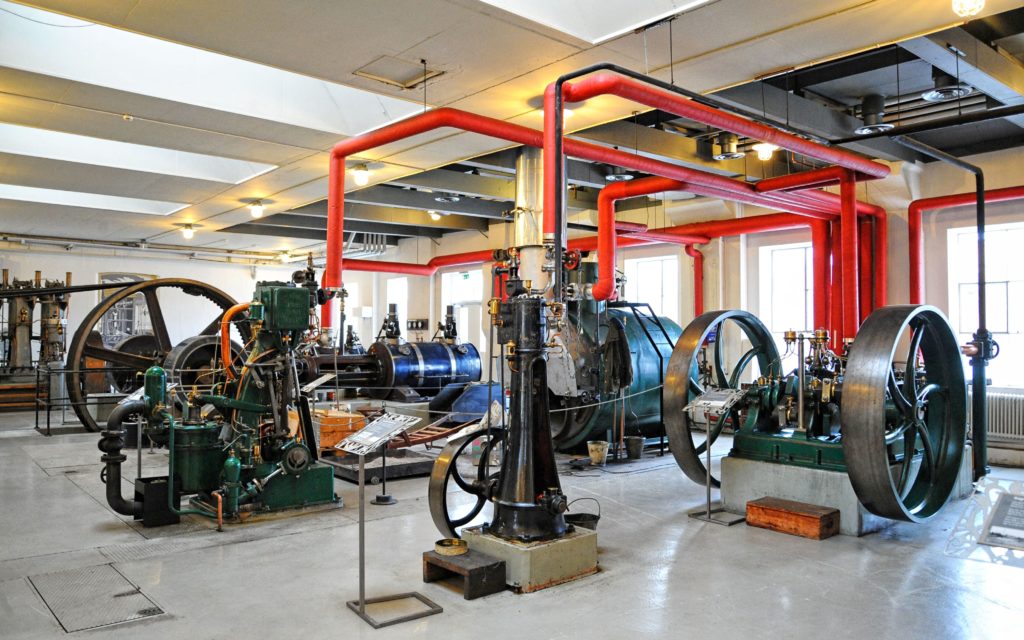
Rifle factory Eskilstuna
The old rifle factory is now a museum celebrating Eskilstuna’s industrial past

The geographical location, far away from the coast and invading armies, was another attractive feature as it would take a long time for invading armies to capture it, during which period it could continue supplying the home side.

A second saviour

Reliance on water power had the drawback of necessitating many small workshops rather than a central workshop, as factories could only be located where there was a fall in the river and wheel could be installed.

Munktell tractor volvo
Munktell’s first tractor was the 30-40, of which this fully restored example at the Munktell Museum is the only known survivor

Yet, by all accounts, manufacture thrived in the area and it was to this hub of activity that a young and hugely talented engineer by the name of Theofron Munktell was drawn.

Munktell had been responsible for upgrading the royal mint in Stockholm and much of the equipment on which it ran during the early part of the 19th century was designed and built under his supervision.
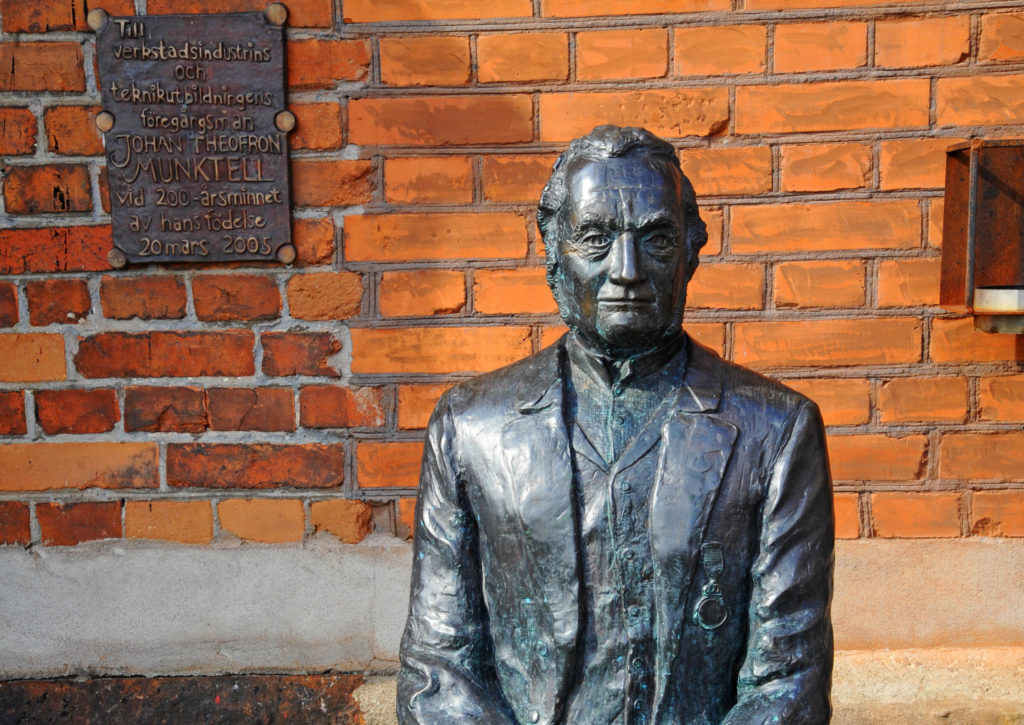
Theofron Munktell Eskilstuna, Sweden
A statue of Theofron Munktell sits outside the Munktells Museum

His first assignment was with the Royal armoury and from there he started his own engineering business, which at first, comprised the manufacture of book printing presses.

His company rapidly grew and would go on to encompass mining equipment, threshers, steam engines and even the first railway locomotive made in Sweden, the Forstlingen.

The first tractors

Tractor production commenced in 1913 with the Munktell 30-40, a large machine modelled on the American prairie ploughing tugs of the time, designed for large estates rather than local farms.

Munktell clearing forests and rocks
A Munktell 20-24 is seen here clearing boulders from fields. They were first produced in 2017

Further, smaller models followed, as did a marriage of convenience with another engineering company, Bolinder, which was famed for its boat engines.

The two companies shared the same bank and it was this institution that brought them together as Bolinder Munktell (BM) and established their base at Eskilstuna.

Elsewhere in Sweden

The second world war saw a drastic shortage of raw material, especially rubber, hampering the fortunes of a younger Swedish company which had built its business on building cars trucks and buses.

Volvo car factory SKF Sweden
Volvo car production in the 1920s

The company was called Volvo, a name which comes from the Latin of ‘I roll’. This gives a clue as to its parentage and source of capital – the bearing company SKF.

The founder of SKF was Sven Wingqvist, inventor of the self aligning ball bearing, a development which had brought him a significant fortune.

Although never a subsidiary of SKF, Volvo was initially financed by WingqvistIt himself. It struggled with sales of its first car, built in 1927, but a truck, introduced the following year, was such a success that it allowed the company to later buy up its engine supplier, Pentaverken, to create Volvo Penta.

Running out of rubber

Throughout the 1930s, the company expanded due to its engine and vehicle manufacture, the latter requiring rubber for their tyres.

Unfortunately, other countries had a stronger call on the world’s rubber supplies at the time, necessitating a rethink on what it was possible to produce.

Tractors of the time ran on steel wheels and although Volvo had never made a tractor before, it had supplied a six-cylinder engine to BM earlier in the war for its tractor range.

Tractors were obviously a vehicle it could continue to produce so in 1943, it started buying transmissions from BM for the first Volvo tractor, the T.

Volvo T41 tractor in Sweden
Volvo’s first tractor was the T41. It had a Bolinder Munktell transmission and Volvo’s own Hesselmen engine

Cooperation between the two companies continued until 1950 when the banks once again stepped in and merged them to form BM Volvo.

Although tractor production was concentrated in Eskilstuna, they at first competed on the market as two separate brands, but gradually the operation was streamlined until, in 1973, the tractors were sold only in red under the rearranged name of Volvo BM.

Ground speed PTO points to pastures new

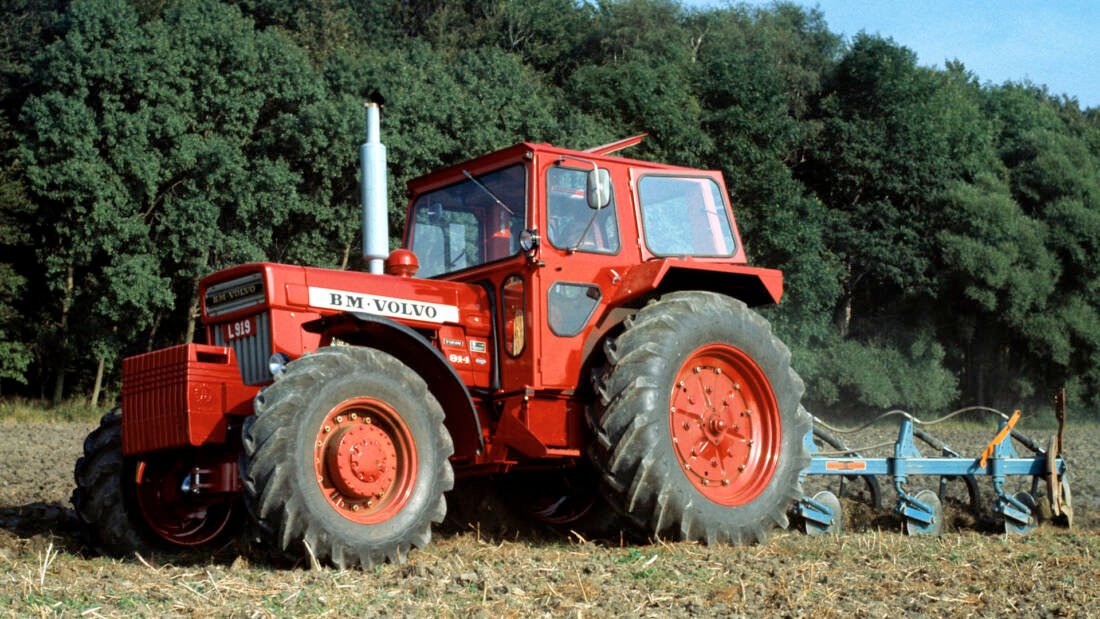
Forestry, construction and military requirements, as well as agriculture, played a large part in the company’s fortunes and the tractors were engineered with ground speed PTO.

Volvo army pto
Like its forerunners, this ex army Volvo BM 650 from Sweden has no lift linkage, just a NATO coupling and live PTO

This feature enabled them to be coupled to a powered trailer, creating a 6×4 vehicle which met the army’s requirement for rapid transport through the Nordic forests whatever the season.

It wasn’t just the army that took advantage of this ability, it also came to prominence in the mid 1960s when Volvo created a four-wheel-drive articulated dump truck from its Boxer 350 skid unit and a trailer bolted directly onto the rear.
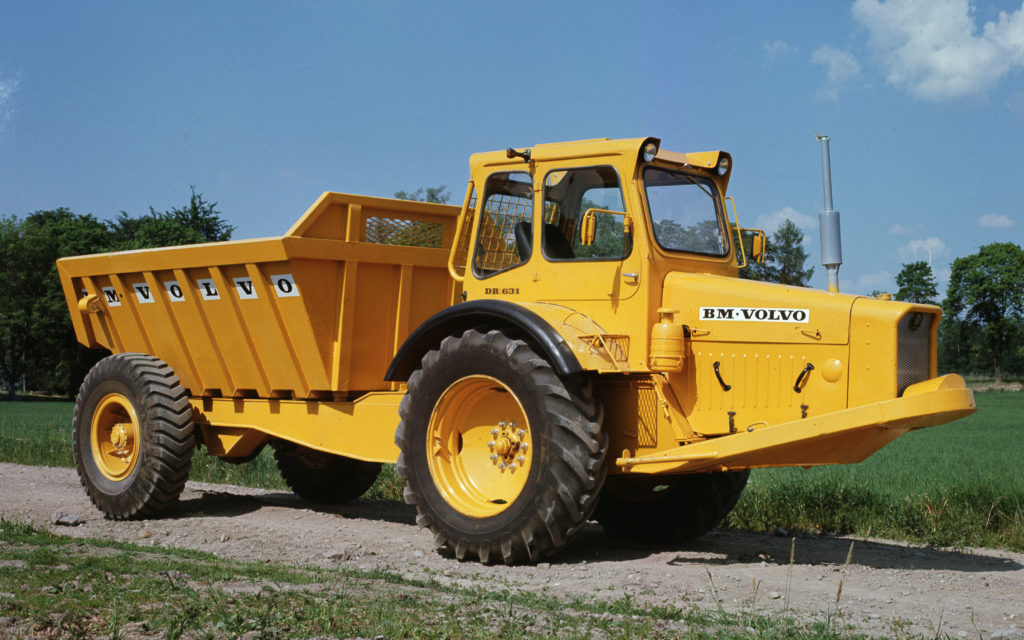
Volvo trailer boxer 350 Sweden
The company’s first articulated dump truck, known as gravel Charlie, was introduced in 1966,. Note the ‘trailer tyres’ at the rear.

When joined like this, the two halves became one vehicle and although it was underpowered by today’s standards, sporting just 65hp, it became a great success for the company.

This was the birth of Volvo construction and it was just 12 years later that Volvo decided to abandon agricultural machinery altogether and hand over its tractor production to in Finland, while it concentrated on construction equipment.

Nordic tractor valmet volvo
The Nordic tractor was a joint development between Volvo and Valmet. Volvo then passed on its tractor business to Valmet

This process was completed in 1985 with the last two models built at Eskilstuna being the Volvo BM 2005 and its turbocharged sibling, the Volvo 2105.

The works then closed, although the buildings still exist and are used for a variety of purposes, including a community centre.

A new dawn for Volvo

On reflection it was a wise move, there had been a massive post-war impetus to mechanise the land and within 30 years that had been achieved.

Farmers had not only adopted the tractor but had appreciated it could do far more work with a lot less labour, hence tractors got bigger, and so fewer, meaning that volume production declined.

Volvos saints Eskilstuna
Although Volvo no longer makes tractors, the company still produces timber handling equipment

There simply wasn’t the need for the production capacity available within the industry. Volvo managed to get out in time and concentrate on alternative markets, others were not so lucky and many familiar names faded from the scene.

St. Eskil is not forgotten in his adopted land, nor is the city’s industrial legacy. The original gun factory is now a museum while the tractor assembly buildings still stand by the river that gave birth to the city.

Volvo still has a factory close to Eskilstuna for the production of transmission components, where it continues with research into alternative drive methods.

There is also a demonstration and training facility, between the two, the company employs 2,100 people in the city of its birth.

Bu haberler ilginizi çekebilir

Rising costs and global competition push U.S. agriculture toward breaking point
CropLife Asia announces new Office Bearers; BASF Executive re-installed as President
Agricultural machinery: the market in Puglia is recovering
PotatoEurope 2026: Ventilation systems for potato storage
Advance Agrolife invests ₹25 crore
ETİKETLENDİ:agrilandgıdahabermansetTarım

Aylık Haber Bültenine Kaydolun

Gelişmeleri takip edin! Güncel haberleri doğrudan e-posta kutunuza alın.
Kaydolmakla, Kullanım Şartlarımızı kabul etmiş ve Gizlilik Politikamızda belirtilen veri uygulamalarını onaylamış olursunuz. İstediğiniz zaman aboneliğinizi iptal edebilirsiniz.
Bu Haberi Paylaşın
Facebook Bağlantıyı Kopyala Yazdır

Dergimiz Yayında

Okumak için Tıklayın
FacebookBeğen
InstagramTakip et
YouTubeAbone Ol
Türkiye’nin tarım ve teknoloji dünyasındaki sesi. Agroworld Dergisi, akıllı tarım uygulamalarından modern traktör teknolojilerine kadar geniş bir yelpazede güncel içerik, dijital dergi arşivi ve sektörel analizler sunarak geleceğin sürdürülebilir tarım dünyasına ışık tutmaktadır.
  • Künye
  • İletişim
  • Hakkımızda
  • Son Sayımız
  • Kullanım Koşulları
  • Reklam
  • Abonelik
  • Dergi arşivi
  • Fuar Takvimi
  • Gizlilik Politikası
banner
Tekrar hoşgeldiniz!

Hesabınıza giriş yapın

Kullanıcı Adı veya E-posta Adresi
Şifre

Şifrenizi mi unuttunuz?