
EIMA International 2026 has unveiled 19 award-winning “Technical Innovations” showcasing the latest advances in agricultural machinery and farming technology. The winning models will be displayed at the Bologna Exhibition Centre from 10 to 14 November, alongside 35 technologies recognised with the “Technical Evolution” award.
The winners of the prestigious EIMA International “Technical Innovations” competition were officially announced at an awards ceremony held at the historic Palazzo Re Enzo in Bologna.
Selected by an international jury of experts, the 19 winning models represent original applications with high technological content and demonstrate how innovation in agricultural machinery and farming technology is responding to some of the most significant challenges facing global agriculture.
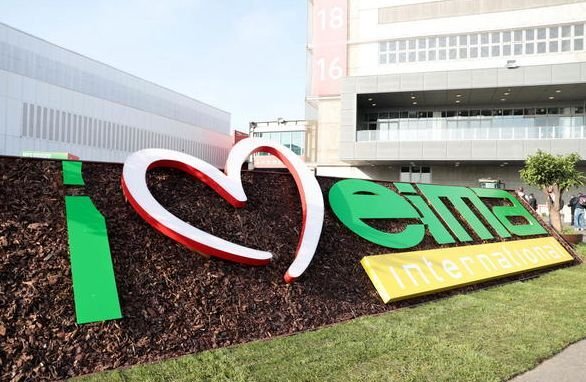
The awards ceremony offered an exclusive preview of EIMA International 2026, the major agricultural machinery exhibition organised by FederUnacoma and scheduled to take place in Bologna from 10 to 14 November.
For the first time, the five-day exhibition will run from Tuesday to Saturday.
19 Technical Innovations to Be Showcased at EIMA International 2026
During EIMA International, all 19 models recognised as “Technical Innovations” will be showcased in a dedicated static display in the Quadriportico area of the Bologna Exhibition Centre.
The selected innovations represent advanced technological solutions designed to improve the efficiency, safety, sustainability and productivity of modern agricultural operations.
In addition to the 19 main Technical Innovation awards, the expert jury selected a further 35 models for the “Technical Evolution” award.
This distinction recognises original and significant improvements to agricultural machinery, equipment and technologies that have already been manufactured or patented.
Together, the two award categories highlight the agricultural machinery industry’s continuous investment in research, engineering and technological development.
Agricultural Machinery Innovation Takes Centre Stage
From AI-based agricultural safety systems and digital platforms for the remote management of irrigation systems to smart lawnmowers, hybrid power systems and next-generation agricultural equipment, the innovations presented at EIMA demonstrate the rapidly expanding technological potential of the industry.
The award-winning solutions will be showcased alongside approximately 60,000 models across 14 product categories at EIMA International, offering visitors a broad overview of the technologies transforming agriculture.
According to FederUnacoma President Mariateresa Maschio, innovation has always been a defining characteristic of the agricultural machinery sector, although some of its most important developments are not always immediately visible.
“Agricultural machinery has always been a highly innovative sector. Technological innovation, however, is a revolution that is sometimes invisible because it often consists of details: unassuming devices that nevertheless guarantee a qualitative leap in farmers’ work. Today’s event is designed precisely to bring innovation back into the spotlight and to highlight its full value,” Maschio said.
AI, Smart Farming and Hybrid Technologies Shape the Future of Agriculture
The EIMA International Technical Innovations competition reflects some of the most important trends currently reshaping agriculture, including artificial intelligence, smart farming, agricultural automation, digitalisation, precision agriculture and alternative power systems.
These technologies are becoming increasingly important as farmers and agricultural businesses seek solutions that can increase productivity while reducing resource consumption and environmental impact.
The technological transformation of agricultural machinery is also helping the industry respond to broader global challenges, including rising food demand, climate change, soil degradation and increasing pressure on natural resources.
Agricultural Technology Responds to Global Farming Challenges
The agricultural sector is facing increasingly complex challenges as global food demand rises while producers must simultaneously protect natural resources and adapt to changing climatic conditions.
According to Simona Rapastella, General Manager of FederUnacoma, technological innovation will play a central role in addressing these challenges.
“The agricultural sector faces highly complex challenges linked to the increase in global food demand and the need to preserve natural resources, mitigate the risks of climate change and prevent soil degradation,” Rapastella said.
“The answer to all this lies precisely in the technological potential of the sector and in an event such as EIMA, where innovation is much more than a competitive factor; it is a tool for shaping the future.”
EIMA International as a Global Platform for Agricultural Technology
With thousands of agricultural machines, components and technological solutions on display, EIMA International provides a major international platform for manufacturers, farmers, contractors, researchers and industry professionals to explore the technologies shaping the future of agriculture.
The “Technical Innovations” programme highlights how developments in agricultural machinery technology can translate into practical benefits for farmers, from improved productivity and operational efficiency to greater safety and environmental sustainability.
The 2026 edition will therefore place particular emphasis on technologies capable of supporting the transition towards smarter, more connected and sustainable agriculture.
Industry and Universities Join Forces on Agricultural Innovation
The awards ceremony also highlighted the importance of cooperation between agricultural machinery manufacturers and academic institutions.
The event was attended by Michele Mattetti, Full Professor of Agricultural Mechanics at the University of Bologna and Delegate for the Third Mission of the Department of Agri-Food Sciences and Technologies, as well as a member of the “Technical Innovations” competition committee.
Professor Mattetti focused on the importance of strengthening synergies between the manufacturing sector and universities in research and technological development.
His contribution also highlighted different models of industry-university collaboration, demonstrating how partnerships between companies and academic institutions can accelerate research, support technological innovation and help transform scientific developments into practical solutions for modern agriculture.